Launching a game to players around the world has never been more accessible. Digital storefronts have allowed indie studios to reach audiences far beyond their home markets. However, expanding globally requires more than translating menus and dialogue. Localization is a strategic process that adapts a game to different languages, cultures, and player expectations, helping studios create experiences that feel native rather than foreign.
Many indie developers invest years building engaging gameplay only to discover that poor localization limits downloads, creates negative reviews, and reduces player retention. Understanding the most common mistakes can help studios avoid unnecessary costs while creating a stronger international launch.
What Is Localization?
Localization is the process of adapting a game for players in different regions while preserving its intended experience. It includes professional translation, cultural adaptation, interface adjustments, date and number formatting, audio considerations, and quality assurance testing.
Unlike simple translation, localization ensures that dialogue, humor, tutorials, achievements, and in-game instructions make sense within each target culture. It also considers regional regulations, platform requirements, and player expectations.
A well-planned localization process allows players to immerse themselves naturally without noticing that the game was originally developed in another language.
Why Indie Studios Need Localization More Than Ever
The global gaming market has become increasingly competitive. While English remains widely used, millions of players prefer purchasing games available in their native language.
Localization has helped many independent games gain unexpected popularity in countries such as Japan, Germany, South Korea, Brazil, France, and Spain. Developers who had originally focused on only one language often discovered that international audiences represented a significant portion of their revenue after expanding into additional markets.
Reaching those players requires more than automated translation. Poorly localized games frequently receive criticism for confusing interfaces, awkward dialogue, and broken user experiences.
Common Localization Challenges for Indie Developers
Limited budgets, tight release schedules, and small development teams often create obstacles throughout the localization process.
Many indie studios underestimate how much text exists within a game. Beyond dialogue, there are menus, tutorials, achievement descriptions, store listings, marketing materials, error messages, downloadable content, and future updates.
Another challenge involves planning. Localization has sometimes been treated as a final task before release instead of being integrated throughout development. This approach often increases costs because developers must repeatedly modify assets that had already been completed.
Technical limitations can also create problems. Fixed text boxes, unsupported fonts, or hard-coded strings may prevent translated content from displaying correctly.
Biggest Localization Mistakes Indie Studios Make
Waiting Until Development Is Almost Finished
One of the most expensive mistakes is delaying localization until the game is nearly complete.
By that stage, developers have already finalized user interfaces, dialogue systems, and artwork. Even small language adjustments may require redesigning screens or modifying code, resulting in avoidable delays.
Planning localization early makes future updates far more manageable and reduces overall production costs.
Relying Only on Machine Translation
Machine translation tools have improved considerably, but they still struggle with context, humor, idioms, and emotional dialogue.
Games frequently contain character personalities, fantasy terminology, jokes, and wordplay that automated systems cannot interpret accurately. Players quickly notice unnatural language, which affects immersion and trust.
Professional service providers combine linguistic expertise with gaming knowledge to produce translations that sound authentic instead of mechanical.
Ignoring Cultural Differences
Not every reference translates successfully across cultures.
Visual symbols, gestures, colors, jokes, historical references, and character names may carry different meanings in other regions. A phrase that feels humorous in one language could become confusing or even offensive elsewhere.
Industry-specific solutions include cultural review alongside linguistic translation to ensure content feels appropriate for every target market.
Forgetting User Interface Expansion
Different languages require varying amounts of space.
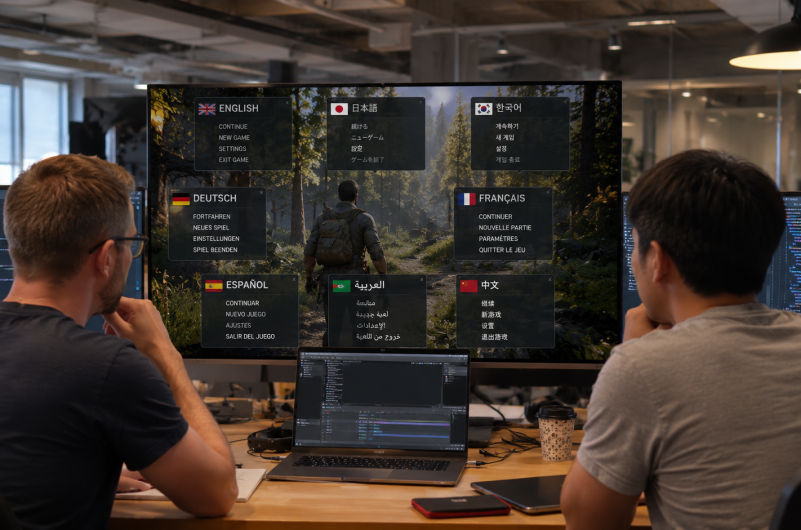
German, French, and Russian text often becomes much longer than English, while Chinese and Japanese may use fewer characters. Studios that overlook interface flexibility frequently encounter overlapping text, broken buttons, and unreadable menus.
Responsive interface design supports smoother localization and improves the player experience.
Skipping Linguistic Quality Assurance
Translation alone does not guarantee quality.
Games should undergo linguistic testing within the actual gameplay environment. Testers verify dialogue flow, subtitle timing, menu functionality, text formatting, and contextual accuracy.
Many issues only become visible after translated content appears inside the finished game.
How Professional Localization Services Solve These Problems
Experienced localization service providers combine translators, editors, project managers, engineers, and linguistic testers throughout the production cycle.
Instead of translating isolated text files, they work within structured workflows that preserve consistency across every part of the game.
Professional services often include:
- Terminology management
- Style guides
- Context-aware translation
- Cultural adaptation
- Functional and linguistic testing
- Ongoing update support
These quality standards help studios maintain consistent branding while reducing costly revisions after launch.
Key Benefits of High-Quality Localization
Strong localization creates measurable business value beyond accurate translation.
Players are more likely to complete tutorials, understand game mechanics, and recommend titles that feel naturally written. Better communication also reduces customer support requests caused by confusing instructions or unclear objectives.
From a business perspective, localization increases discoverability in international storefronts, supports stronger review scores, improves player retention, and opens opportunities in additional regional markets.
For indie developers with limited marketing budgets, positive player reviews can become one of the most valuable growth drivers.
Industry Applications Beyond the Game Itself
Localization extends beyond gameplay.
Studios should also localize:
- App store descriptions
- Steam pages
- Website content
- Marketing campaigns
- Social media announcements
- Customer support documentation
- Community updates
- Downloadable content
Maintaining consistent messaging across every customer touchpoint strengthens brand credibility and improves global engagement.
Best Practices for Successful Localization
Studios can improve results by following several proven best practices.
Begin planning during early development rather than after production. Build flexible user interfaces that accommodate text expansion. Provide translators with screenshots and gameplay context whenever possible. Maintain a terminology database for consistent character names and game mechanics. Finally, schedule dedicated localization testing before release.
These practices have consistently reduced production issues while supporting smoother international launches.
Why Choosing the Right Localization Provider Matters
Not every translation provider specializes in video games.
Gaming localization requires technical knowledge, creative writing skills, cultural understanding, and familiarity with development workflows. An experienced provider understands branching dialogue, variable strings, platform certification requirements, and player expectations across different markets.
Selecting a trusted professional service may initially seem like a larger investment, but it often lowers long-term cost considerations by preventing rework, protecting player satisfaction, and supporting future game updates.
A collaborative localization partner becomes an extension of the development team rather than simply a translation vendor.
Successful global releases rarely happen by chance. Careful localization helps indie studios connect with players, strengthen their reputation, and compete confidently in international markets.
Avoiding common mistakes such as relying solely on machine translation, delaying localization planning, overlooking cultural differences, or skipping quality assurance can significantly improve both player experience and commercial success.
Whether preparing for a first international launch or expanding an existing title into new regions, working with an experienced localization service provider ensures every aspect of the game meets high quality standards. If your studio is ready to reach more players worldwide, request a personalized quote or speak with a localization expert to discover customized solutions that support your game’s long-term growth.